Try the charging routine before you buy the car. If you’d use an on-street post on Wednesday evening, visit at that time and see if you can find a space. If you’d rely on work charging, ask how colleagues book a slot and whether there is a time limit.
Work out how much energy your week needs
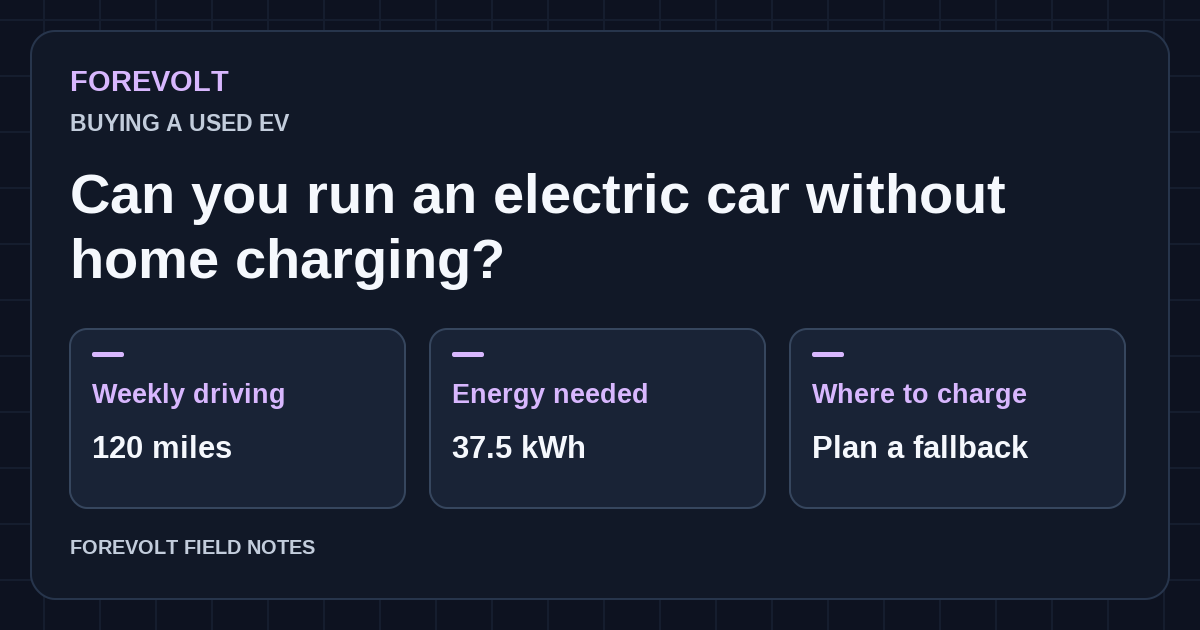
At 3.2 mi/kWh, 120 miles takes about 37.5 kWh from the battery. An AC point delivering 7 kW would take roughly 5 hours and 20 minutes to supply that much energy in ideal arithmetic. Charging losses, the car’s own AC limit or an interrupted session can make it longer. Two shorter sessions may fit your life better than one long visit.
Find one regular option and one fallback
Check on-street posts near home, chargers at work or locations you already visit, then find a rapid site for the weeks the regular option isn’t available. Verify the connector, rate, operating hours, parking restrictions, cable requirements and local payment method. Energy Saving Trust’s charging guide explains the main options.
Check with your council before planning a cable outside
Don’t trail a cable across the pavement. If you’re considering a purpose-built pavement channel, check whether your council permits it and what it requires. Thurrock’s guidance, for example, tells residents to apply to the council rather than install one themselves.
Test the idea in a bad week
Assume a busy charging bay, colder weather and a longer journey than usual. If the only backup involves a detour you wouldn’t want to make after work, revisit the plan before choosing a car. Compare using your own tariffs with our charging cost method.